


Spotify Won’t Play Local Files? 10 Proven Fixes That Actually Work
Spotify's Local Files feature makes it easy to listen to music stored on your computer alongside your streaming library. However, many users run into an annoying issue where Spotify won't play local files, even though the songs appear in their playlists. If you're experiencing this problem, don't worry. In this guide, we'll explain why Spotify local files are not working, walk you through proven solutions, and introduce an alternative way to manage your Spotify music for offline listening.
Contents Guide Part 1. Why Won't Spotify Play Local Files?Part 2. 10 Ways to Fix Spotify Local Files Not WorkingPart 3. 4 Ways to Fix Spotify Local Files Not Syncing to MobilePart 4. Better Way to Manage Your Spotify MusicPart 5. Frequently Asked QuestionsPart 6. Final Thoughts
Part 1. Why Won't Spotify Play Local Files?
There are several reasons why Spotify won't play local files. Identifying the cause can help you apply the correct solution more quickly.
Some of the most common reasons include:
- Unsupported audio file formats
- Local Files feature is disabled
- Music files have been moved or deleted
- Spotify cache is corrupted
- File permissions are restricted
- Firewall or antivirus software blocks Spotify
- Spotify is out of date
- Local files are DRM-protected
- Sync problems between desktop and mobile devices
Fortunately, most of these issues can be resolved in just a few minutes.
Part 2. 10 Ways to Fix Spotify Local Files Not Working
Fix 1: Enable Local Files
The first thing to check is whether Local Files is enabled.
On the desktop app:
- Open Spotify.
- Click Settings.
- Scroll to Local Files.
- Turn on Show Local Files.
- Verify that your music folders are selected.
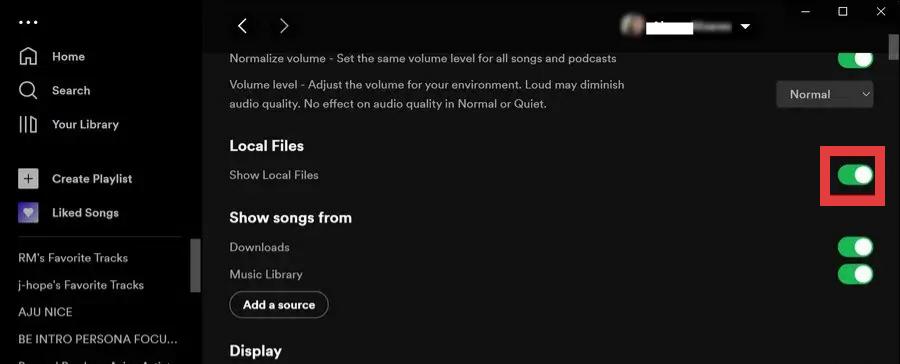
If this option is disabled, Spotify won't play local files because it can't access your music library.
Fix 2: Check the File Location
Spotify only plays files that remain in their original folders. If you've moved the files, renamed folders, or deleted music, Spotify may no longer be able to locate them. Restore the files to their original location or re-add the folder in Spotify Settings.
Fix 3: Verify the Audio Format
One of the most common reasons why Spotify won't play local files is an unsupported audio format. Spotify generally supports MP3, MP4 (audio only, without video), and M4A (non-DRM AAC files). If your files use an unsupported format, Spotify may display them but refuse to play them. If necessary, convert your music into MP3 or M4A before importing it into Spotify.
Fix 4: Re-add Your Music Folder
Sometimes Spotify loses track of your library. Try removing the music folder from Spotify and then adding it again.
To do this:
- Open Settings.
- Navigate to Local Files.
- Remove the existing folder.
- Click Add a Source.
- Select your music folder again.
This refreshes Spotify's local file database.
Fix 5: Clear Spotify Cache
Corrupted cache files may prevent local songs from playing.
To clear the cache:
- Open Settings.
- Scroll to Storage.
- Click Clear Cache.
- Restart Spotify.
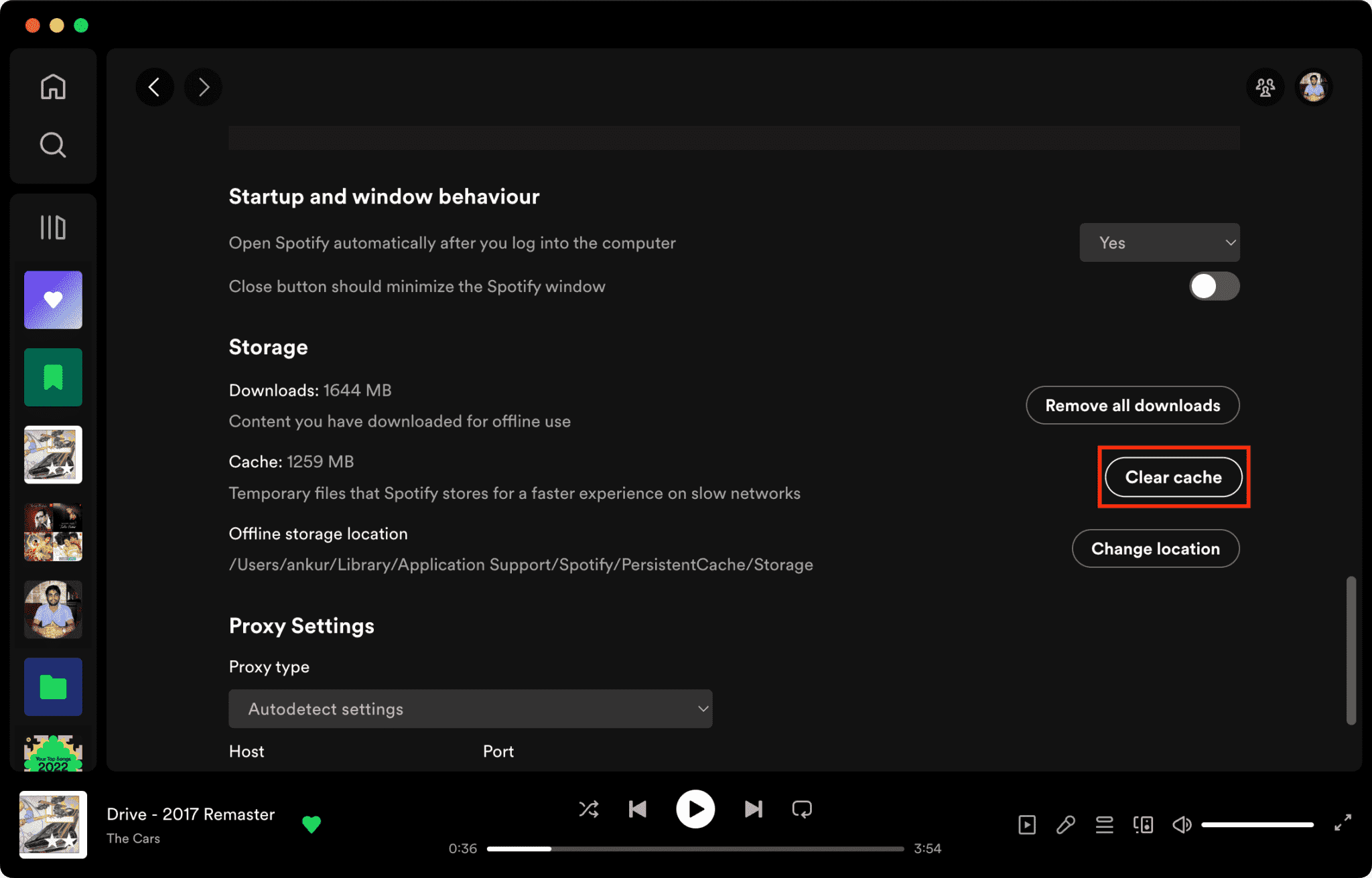
Many users report that this simple step resolves playback issues.
Related Article: How to Clear Spotify Cache on Mac/Windows/iPhone/Android
Fix 6: Update Spotify
How to fix Spotify won't play local files? Older versions of Spotify may contain bugs affecting Local Files. Always install the latest version of Spotify before troubleshooting further.
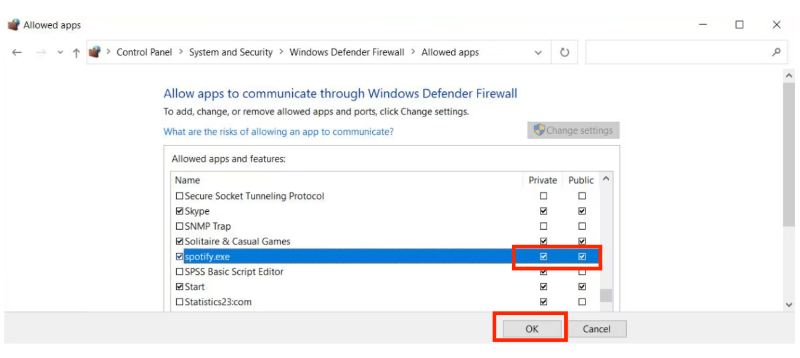
Fix 7: Check Firewall or Antivirus Settings
Your firewall or antivirus software may block Spotify from accessing local files. Temporarily disable the security software or add Spotify to its list of trusted applications. Afterward, restart Spotify and test playback again.
Fix 8: Verify File Permissions
Spotify must have permission to access your music folders.
On Windows:
- Right-click the folder.
- Select Properties.
- Check the Security settings.
On macOS:
- Open System Settings.
- Go to Privacy & Security.
- Ensure Spotify has permission to access your files.
Incorrect permissions are another common reason Spotify won't play local files.
Fix 9: Reinstall Spotify
If none of the previous solutions work, reinstalling Spotify may resolve corrupted application files. After reinstalling, sign back in and re-add your music folders.
Fix 10: Restart Your Device
Although simple, restarting your computer or phone can refresh background services and resolve temporary software conflicts. Don't overlook this step.
Part 3. 4 Ways to Fix Spotify Local Files Not Syncing to Mobile
Many users can play local files on their computer but find that Spotify local files not syncing to their phone. How to fix it? Follow the proper steps below.
Fix 1: Make Sure Both Devices Use the Same Wi-Fi Network
Your desktop and mobile device must be connected to the same wireless network during synchronization.
Fix 2: Use the Same Spotify Account
Verify that you're signed in with the same Spotify account on both devices.
Fix 3: Enable Downloads
Open the playlist containing your local files and enable Download on your mobile device. Spotify will then sync supported tracks.
Fix 4: Spotify Premium Is Required
Local file syncing between desktop and mobile requires an active Spotify Premium subscription. Free accounts cannot sync local files across devices.
Following these steps helps avoid many common Spotify local files not showing issues.
Part 4. Better Way to Manage Your Spotify Music
While Spotify's Local Files feature offers a convenient way to manage your own music, it comes with several notable limitations: supported file formats are restricted, mobile syncing is exclusive to Spotify Premium users, and files often become inaccessible if folder paths change, not to mention that sync failures are relatively common. Given these drawbacks, if you are looking for a more stable and reliable way to enjoy your music offline, DumpMedia Spotify Music Converter is a worthwhile alternative to consider.
With DumpMedia, you can easily convert Spotify songs into MP3, WAV, FLAC, and other formats that can be played on Spotify MP3 players, phones, car stereos, or other devices. For users who frequently encounter problems like Spotify won't play local files, DumpMedia provides a more flexible way to manage personal music collections.
🏆Why Choose DumpMedia Spotify Music Converter?
- Preserve original audio quality
- Keep ID3 tags, album artwork, and metadata
- Batch convert multiple playlists at once
- Play converted music on virtually any device
- No need to rely on Spotify's Local Files sync feature after conversion
Convert Spotify Music to MP3 Step by Step
Step 1. Download and install DumpMedia Spotify Music Converter on your Mac/PC. Launch it, and you will see the interface. Use your Spotify Premium/Free account to log in.
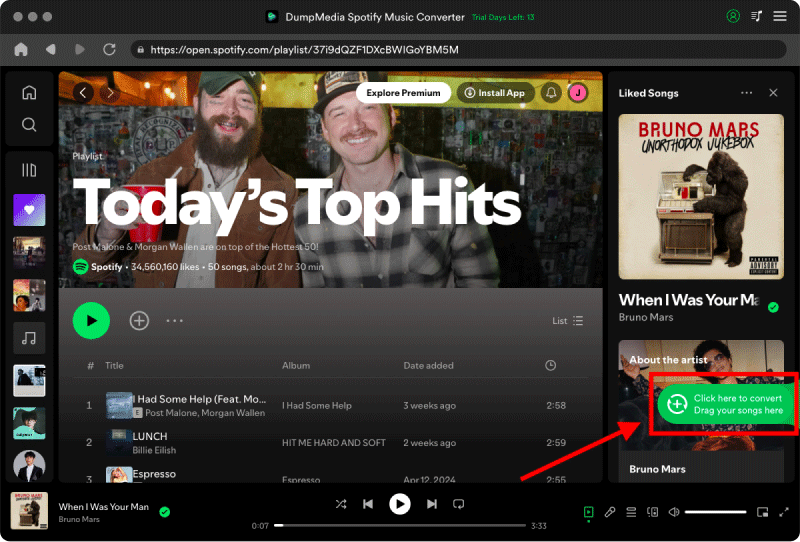
Step 2. Browse or search for tracks, playlists, and albums using the built-in Spotify web player. Drag and drop the songs to the "+" button, and add them to the conversion list.
Step 3. Customize the output format, the bitrate, and the sample rate you like.
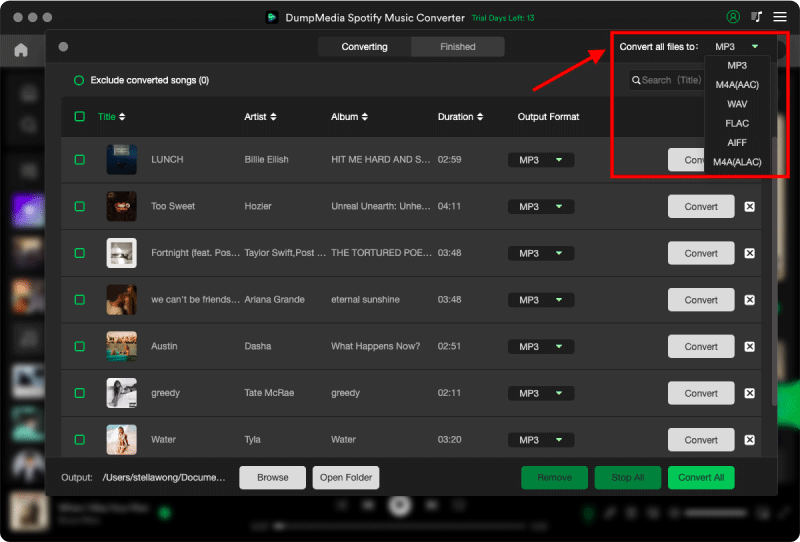
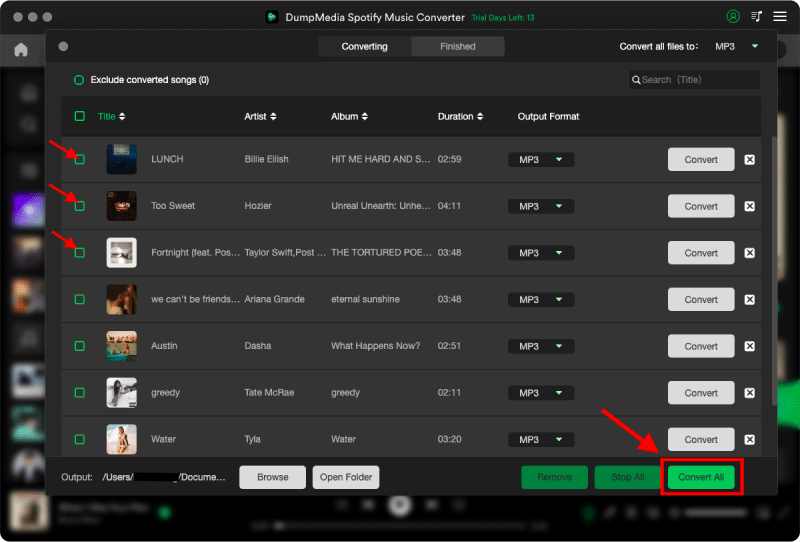
Step 4. As the settings are completed, users can process the conversion by hitting the "Convert" icon. Then DumpMedia will download Spotify playlist to MP3 within seconds with its super-fast speed.
Part 5. Frequently Asked Questions
Does Spotify support MP3 files?
Yes. MP3 is one of Spotify's officially supported local audio formats.
Why are my Spotify local files grayed out?
Grayed-out songs usually indicate that Spotify can't locate the original files or that the files are stored in an unsupported or inaccessible location.
Can Spotify play FLAC files?
Spotify doesn't natively support FLAC as a Local Files format. Converting FLAC files to MP3 or M4A may improve compatibility.
Can Spotify play DRM-protected music?
No. DRM-protected files, such as certain purchased M4P tracks, generally cannot be imported into Spotify's Local Files library.
Part 6. Final Thoughts
If Spotify won't play local files, the issue is usually caused by unsupported file formats, outdated software, or other issues. Fortunately, most of these issues can be fixed using the troubleshooting methods outlined above.
If you frequently encounter problems with Spotify local files not working or Spotify local files not syncing, and you'd prefer a more dependable way to manage your music, DumpMedia Spotify Music Converter offers an efficient solution. It lets you convert Spotify songs and playlists into standard audio formats, making it easier to organize and enjoy your music library across different devices without relying solely on Spotify's Local Files feature.