


iCloud Music Library Not Syncing? 12 Fixes That Actually Work in 2026
Apple Music is designed to sync your songs, playlists, and listening history across all Apple devices automatically. However, many users still encounter the frustrating issue of iCloud Music Library not syncing properly. This issue can happen on iPhone, iPad, Mac, Windows PC, or even after updating iOS/macOS.
The good news is that most syncing issues can be fixed quickly. In this guide, we’ll explain why iCloud Music Library is not syncing and show you 12 proven solutions that actually work. We’ll also introduce a smarter way to keep your Apple Music songs permanently without worrying about syncing problems again.
Contents Guide Part 1. What Does “iCloud/Apple Music Library Not Syncing” Mean?Part 2. Why Is iCloud/Apple Music Library Not Syncing?Part 3. 12 Ways to Fix iCloud/Apple Music Library Not Syncing Part 4. Best Way to Keep Apple Music Forever Without Sync IssuesPart 5. FAQsPart 6. Conclusion
Part 1. What Does “iCloud/Apple Music Library Not Syncing” Mean?
When users report iCloud Music Library not syncing, it usually means Apple Music content is not updating correctly across devices connected to the same Apple ID. Common symptoms include:
- Songs not appearing on other devices
- Playlists failing to update
- Music disappearing after syncing
- Apple Music stuck on syncing status
- Downloaded tracks becoming unavailable
In most cases, the problem is caused by network errors, account mismatches, outdated software, or Apple Music sync bugs.
Part 2. Why Is iCloud/Apple Music Library Not Syncing?
Before fixing the issue, it is important to understand the possible causes behind iCloud Music Library not syncing.
- Unstable Internet Connection: Apple Music relies heavily on cloud syncing. Poor Wi-Fi or unstable mobile data may interrupt the syncing process.
- Sync Library Is Disabled: If “Sync Library” is turned off on one device, Apple Music cannot sync songs or playlists properly.
- Apple ID Mismatch: Using different Apple IDs across devices is one of the most common reasons for iCloud Music Library not syncing.
- Expired Apple Music Subscription: An inactive subscription can stop cloud syncing instantly.
- Software Bugs: iOS or macOS updates occasionally introduce syncing glitches and library indexing problems.
- Large Music Library: Users with thousands of songs may experience delays because syncing can take hours or even days.
- DRM Restrictions: Apple Music songs are DRM-protected. Even after downloading them, access still depends on Apple’s servers and active syncing.
Part 3. 12 Ways to Fix iCloud/Apple Music Library Not Syncing
How can I fix the issue with iCloud Music Library not syncing? If your Apple Music library isn’t syncing, try these solutions to get your tunes flowing again:
1. Turn Sync Library Off and On Again
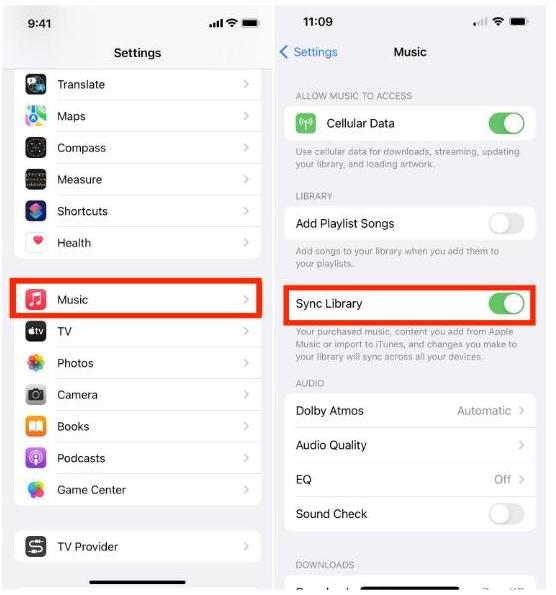
On iPhone/iPad: Open the Settings app. Scroll down and tap Music. Locate Sync Library and toggle the switch to the Off position. Then turn it on again.
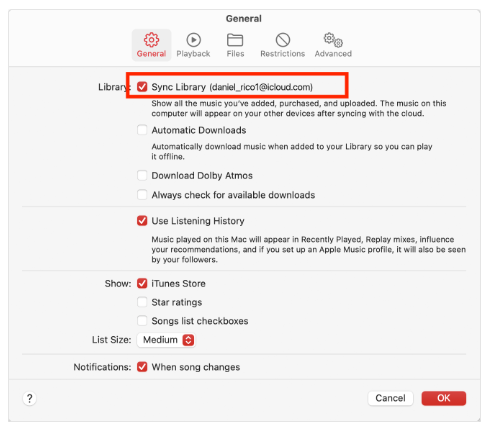
On Mac: Open the Music app. In the top menu bar, click Music > Settings. Go to the General tab and uncheck the box next to Sync Library. Re-check the box next to Sync Library and click OK.
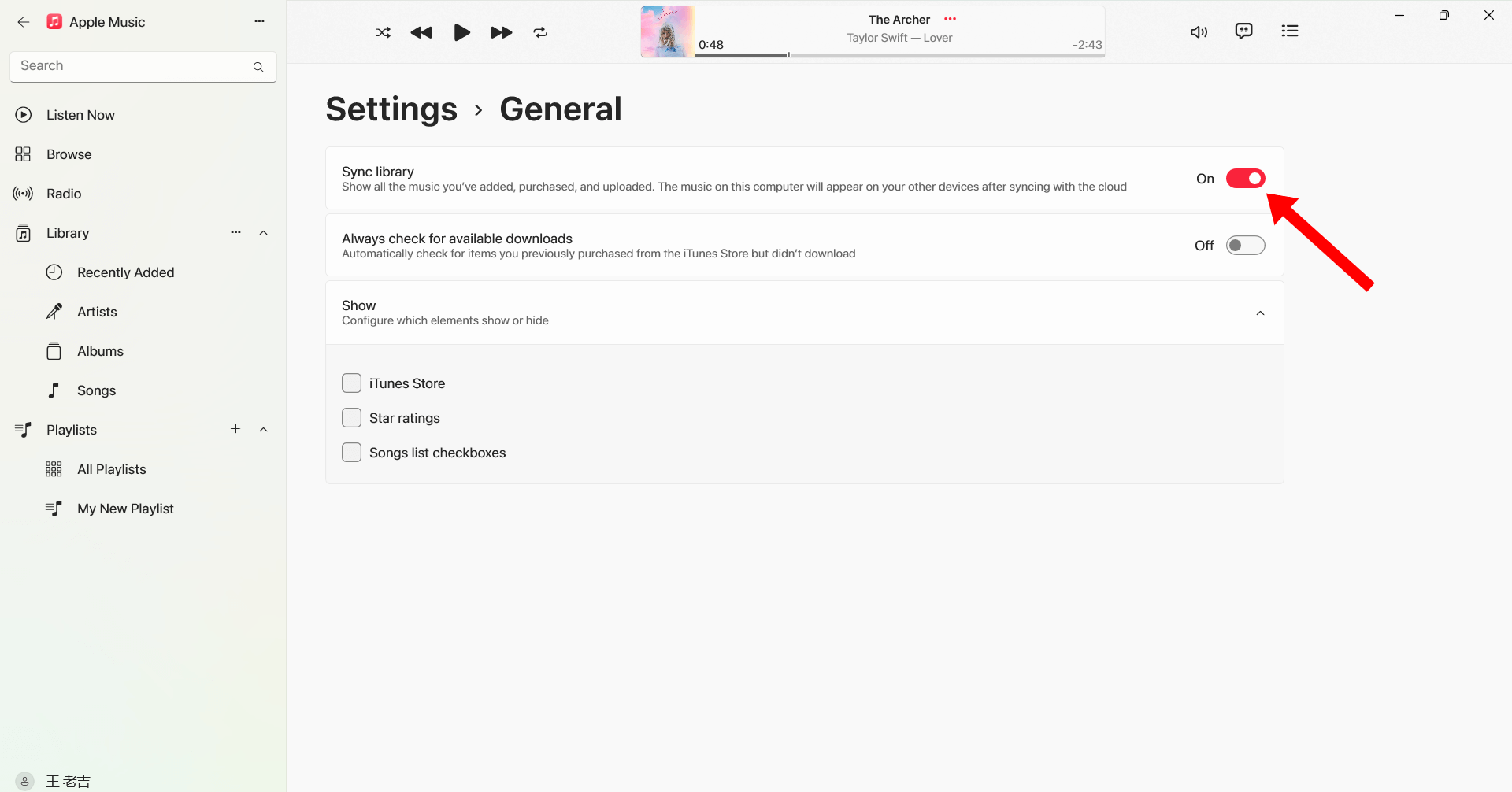
On Windows: Open the Apple Music app. Click Settings. Click the General tab. Toggle the Sync Library switch off, then toggle it back on.
2. Check Apple System Status
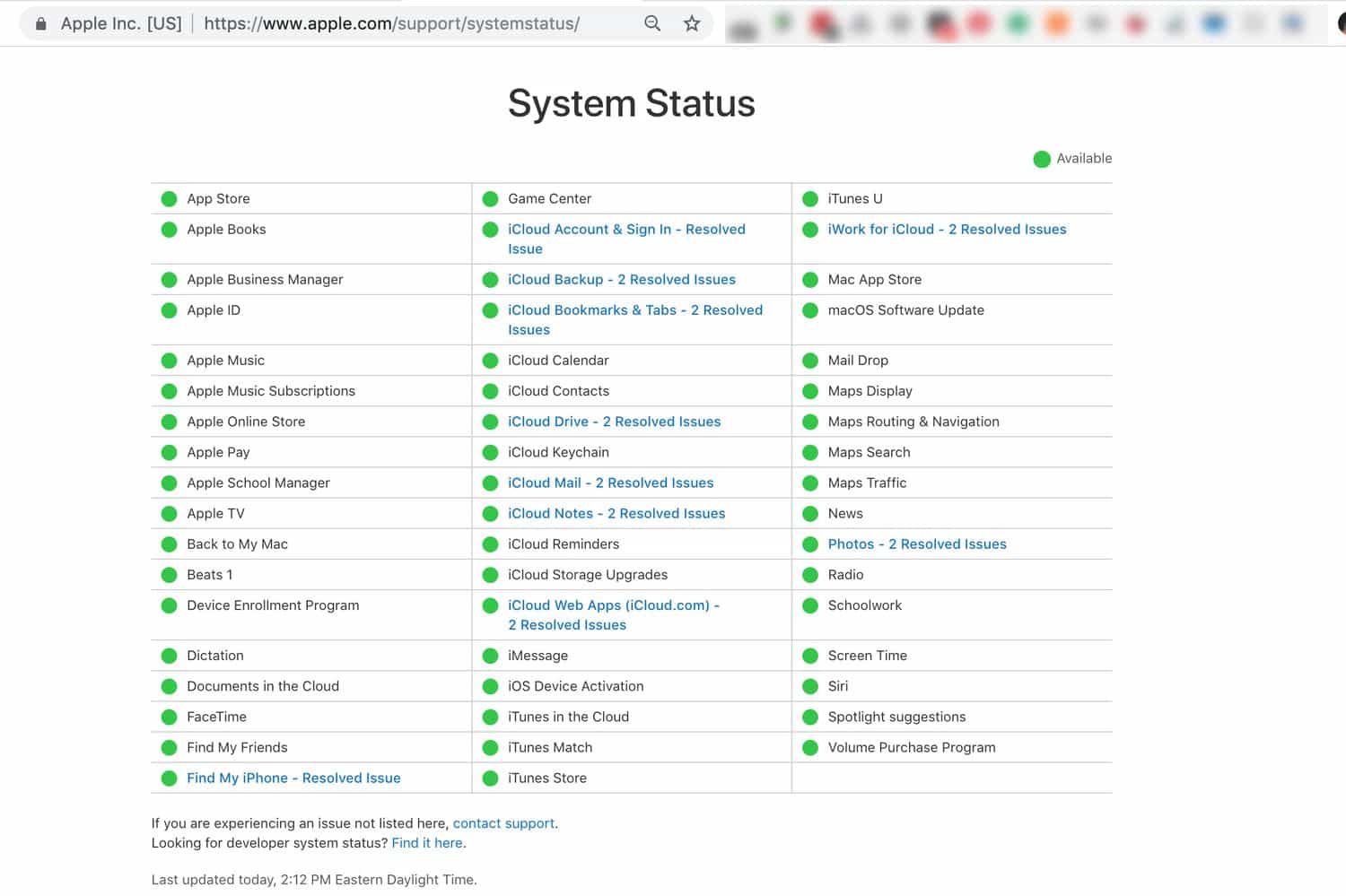
Apple server outages can directly cause iCloud Music Library not syncing issues. Visit Apple’s System Status page and verify that Apple Music services are operational.
3. Update Your Device
Outdated software may contain compatibility issues. Many users resolve iCloud Music Library not syncing immediately after updating their iPhone, iPad, Mac or Windows.
4. Sign Out and Back Into Apple ID
Refreshing your Apple account can rebuild cloud authentication.
5. Restart the Apple Music App
Sometimes the Music app itself freezes during syncing. Force close the app completely and reopen it.
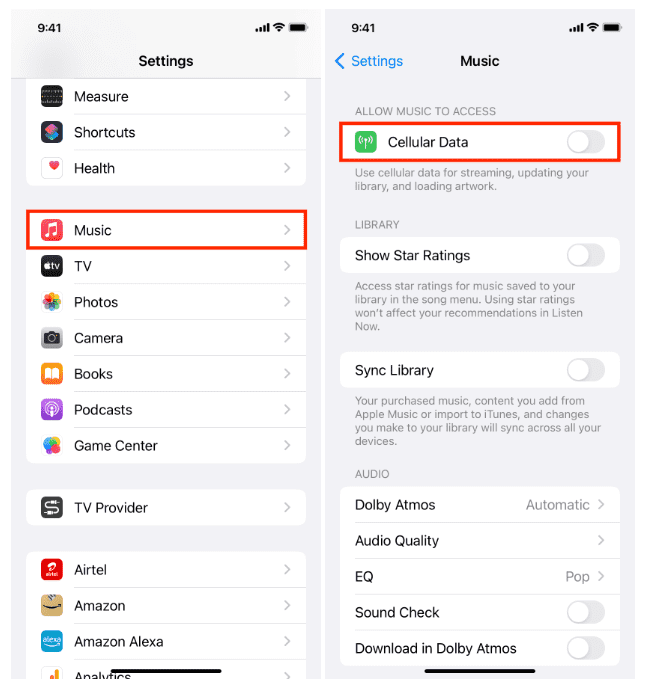
6. Enable Mobile Data for Music
If syncing only works on Wi-Fi, check whether cellular data permissions are disabled.
On iPhone: Go to Settings. Scroll down and tap on Apps (or scroll until you find Music directly). Tap on Music. Ensure the toggle for Mobile/Cellular Data is turned On.
7. Disable VPN Services
VPN connections occasionally interfere with Apple Music server communication. Temporarily disable your VPN and retry syncing.
8. Rebuild Your Music Library on Mac
Rebuilding a music library on your Mac can repair corrupted indexing problems related to iCloud Music Library not syncing.
On Mac: Open Apple Music. Go to File > Library. Select Update Cloud Library.
9. Delete and Re-download Songs
Corrupted downloads may stop syncing. Try removing problematic songs and downloading them again.
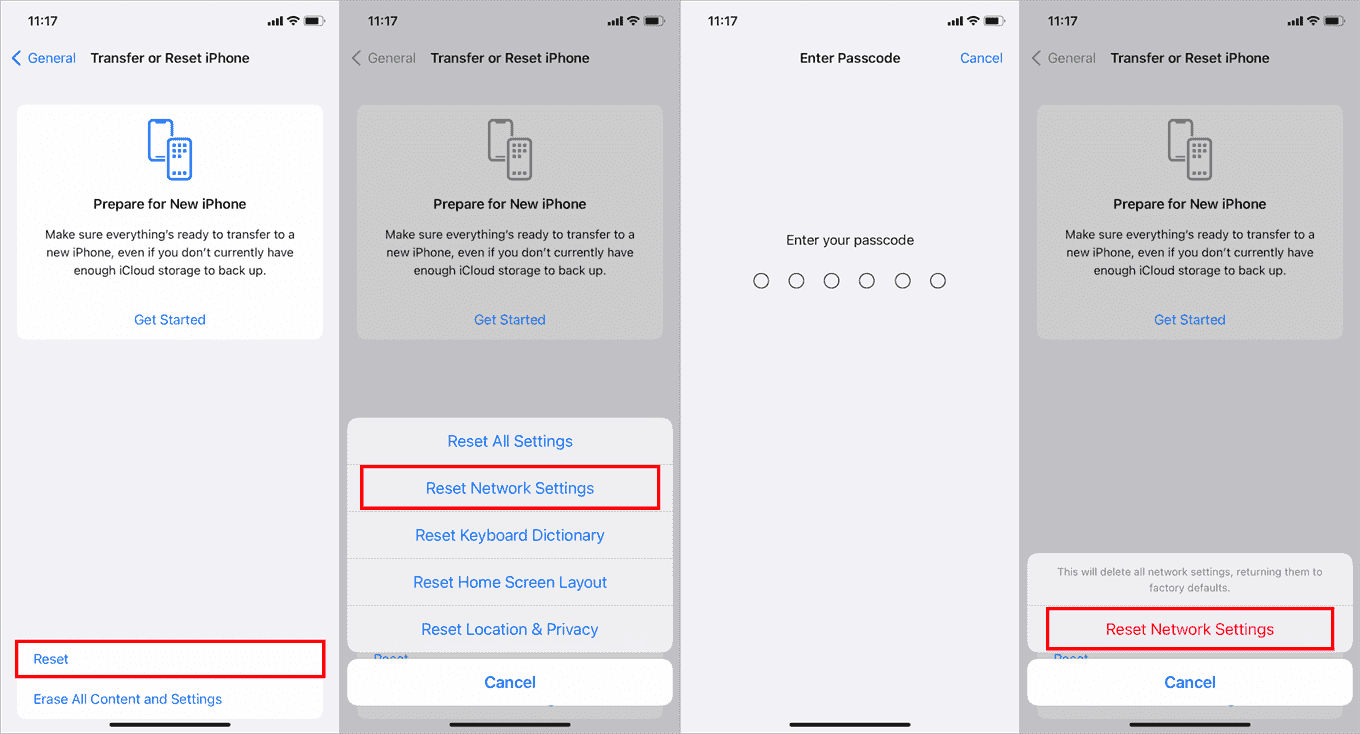
10. Reset Network Settings
Network configuration errors may interrupt Apple Music synchronization.
On iPhone: Go to Settings > General. Scroll to the bottom and tap Transfer or Reset iPhone. Tap Reset. Select Reset Network Settings from the menu. Enter your device passcode when prompted. Confirm the action by tapping Reset Network Settings again. Your device will restart automatically.
11. Free Up Storage Space
Low device storage may prevent Apple Music from syncing correctly. Delete unnecessary files and ensure enough free space remains.
12. Restart All Connected Devices
If only one device shows outdated playlists, reboot every connected device under the same Apple ID. This often refreshes Apple Music synchronization completely.
Part 4. Best Way to Keep Apple Music Forever Without Sync Issues
Even after fixing iCloud Music Library not syncing, many users notice that songs disappear later. Why? Apple Music downloads are not permanent ownership files. They remain linked to subscription status and DRM authorization. If your subscription expires, syncing fails again, or Apple Music detects authorization issues, downloaded songs may become unavailable instantly. This is why many users look for a more permanent solution.
One of the most effective ways to avoid future syncing problems is to use DumpMedia Apple Music Converter. Unlike Apple Music downloads, converted audio files can be stored permanently on your computer and transferred freely across devices. Even if the Apple Music app is not working on your device, you can play Apple Music songs offline on another music player immediately.
🏆Why Use DumpMedia Apple Music Converter
- Convert Apple Music to MP3, WAV, FLAC, and AAC
- Integration with Apple Music web player
- Remove Apple Music DRM protection*
- Keep original sound quality
- Batch download playlists and albums
- Fast conversion speed
- Preserve song metadata and ID3 tags
- Support offline playback on any device
After converting songs locally with DumpMedia Apple Music Converter, music no longer depends on iCloud syncing. For users constantly facing iCloud Music Library not syncing, DumpMedia Apple Music Converter provides a much more stable long-term solution.
Convert Apple Music to MP3 Step by Step
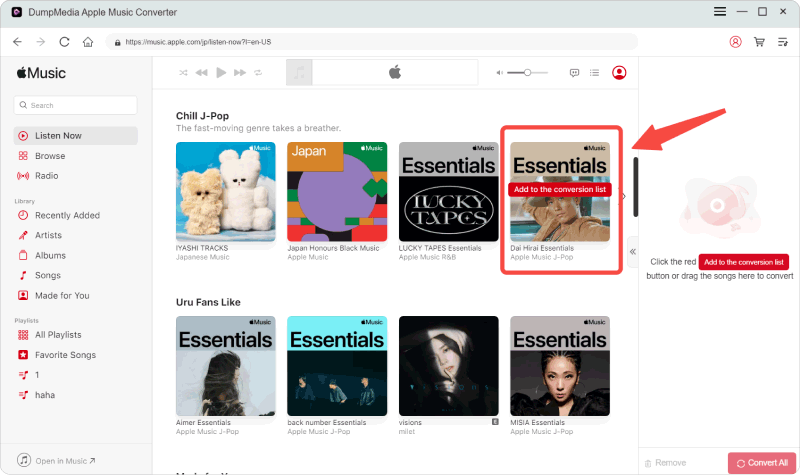
Step 1. Download and install DumpMedia Apple Music Converter on your Mac/PC. Launch it, and you will see the interface. Use your Apple Music account to log in.
Step 2. Find the playlist, album, or specific song you want to convert. You can drag a single song onto the "+" icon on the right side of the screen. Alternatively, open an entire playlist/album and click the "Add to Convert" icon to load the entire list into the converter.
Step 3. Select MP3 (most compatible). Also, you can change the bitrate or the samplerate.
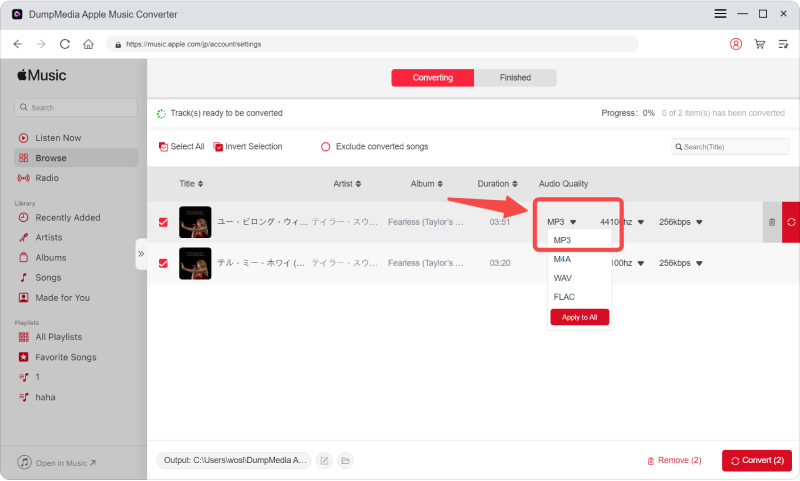
Step 4. As the settings are completed, users can process the conversion by hitting the "Convert" icon. Then DumpMedia will convert Apple Music songs to MP3 within seconds with its super-fast speed.
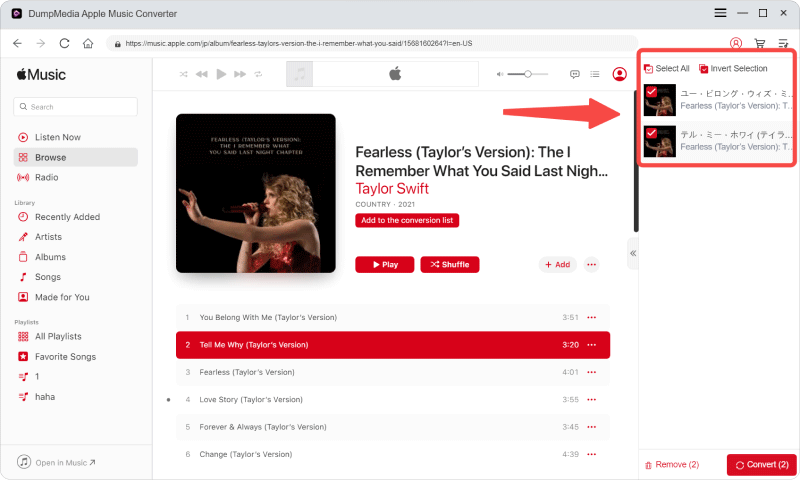
After conversion, your songs become normal audio files stored locally on your device.
Part 5. FAQs
Why is iCloud Music Library not syncing across devices?
This usually happens because of network issues, Apple ID mismatches, disabled Sync Library settings, or temporary Apple server problems.
Why did my Apple Music songs disappear?
Apple Music downloads depend on DRM authorization and active subscriptions. Songs may disappear if syncing fails or subscription verification expires.
How long does Apple Music syncing take?
For small libraries, syncing may finish within minutes. Larger collections can require several hours.
Does Sync Library require Apple Music?
Yes. Sync Library requires either an Apple Music or iTunes Match subscription.
Can I keep Apple Music songs forever?
Yes. By using DumpMedia Apple Music Converter, you can convert Apple Music songs into local files and keep them permanently.
Note: DumpMedia Apple Music Converter is a music conversion tool only. It does not provide or include memberships for Apple Music. Users must have their own valid Apple Music accounts.
Part 6. Conclusion
Experiencing iCloud Music Library not syncing can be frustrating, especially when playlists disappear or downloaded songs suddenly become unavailable. Fortunately, the fixes above can solve most syncing issues on iPhone, iPad, Mac, and Windows.
However, if syncing problems continue happening repeatedly, relying entirely on Apple’s cloud ecosystem may not be enough. Using DumpMedia Apple Music Converter allows you to permanently save Apple Music tracks, avoid future syncing failures, and enjoy your music offline without restrictions.
*DumpMedia works by decrypting and downloading Apple Music songs into DRM-free files, allowing you to obtain a clean, unrestricted copy of your library for any device. Its functionality does not include the DRM removal of local audio files.