


Por que é Spotify Tão lento? Soluções comprovadas em 2026
Se você está se perguntando por que Spotify Se estiver tão lento, você não está sozinho. Muitos usuários enfrentam problemas de buffering, reprodução travada ou carregamento lento ao usar o aplicativo. Spotify, mesmo com uma conexão de internet estável. Neste guia, explicaremos em detalhes por que isso acontece. Spotify Tão lento, o que causa isso e como você pode corrigir permanentemente. Mais importante ainda, também mostraremos uma solução a longo prazo para melhorar o seu desempenho. Spotify experiência de audição sem interrupções.
Guia de conteúdo Parte 1. Por que é Spotify De repente, o carro está mais lento? As principais causas explicadas.Parte 2. Como corrigir Spotify Ser lento permanentementeParte 3. A melhor maneira de melhorar Spotify Experiência de escutaParte 4. FAQsParte 5. Conclusão
Parte 1. Por que é Spotify De repente, o carro está mais lento? As principais causas explicadas.
Existem várias razões pelas quais é Spotify muito lento, e a maioria dos problemas está relacionada ao desempenho do aplicativo, às condições da rede ou às limitações do dispositivo.
1. Conexão de Internet ruim
Uma das razões mais comuns porque Spotify A velocidade da internet está tão lenta que é instável. Mesmo pequenas flutuações podem causar travamentos ou atrasos na reprodução.
2. Spotify Sobrecarga de cache
Ao longo do tempo, Spotify Armazena arquivos em cache para melhorar o desempenho. No entanto, o excesso de dados em cache pode, na verdade, tornar o aplicativo mais lento e é um dos principais motivos pelos quais ele é... Spotify Muito lento em vários dispositivos.
3. Versão desatualizada do aplicativo
Utilizando um método desatualizado Spotify A versão pode causar problemas de desempenho. Bugs e problemas de compatibilidade geralmente explicam o porquê. Spotify O aplicativo ficou muito lento depois das atualizações.
4. Limitações de desempenho do dispositivo
Dispositivos com pouca memória ou mais antigos podem ter dificuldades para lidar com o problema. Spotify suavemente, o que é outro motivo comum pelo qual o Spotify O aplicativo está muito lento.
5. Aplicativos em segundo plano que consomem recursos
Se vários aplicativos estiverem sendo executados em segundo plano, Spotify Pode haver lentidão devido aos recursos limitados do sistema, contribuindo para o motivo de ser Spotify Muito lento durante a reprodução.
6. Spotify Configurações
Muitos usuários relatam que Spotify A lentidão só ocorre durante o streaming de músicas. Isso geralmente está relacionado ao ajuste da taxa de bits do streaming ou à troca adaptativa de qualidade. Esses fatores explicam por que isso acontece. Spotify Muito lento, principalmente durante a reprodução de música, mas não durante o uso de outros aplicativos.
Parte 2. Como corrigir Spotify Ser lento permanentemente
É o seu Spotify Seu computador está lento, travando ou demorando uma eternidade para carregar? Aqui estão algumas maneiras eficazes de melhorar o desempenho:
1. Limpe o Spotify Esconderijo
Ao longo do tempo, Spotify O aplicativo armazena grandes quantidades de dados temporários e faixas "em cache" para acelerar a reprodução. No entanto, um cache muito grande ou corrompido pode ter o efeito oposto, causando atrasos significativos. Limpar o cache nas configurações do aplicativo força o software a atualizar sua estrutura de dados.
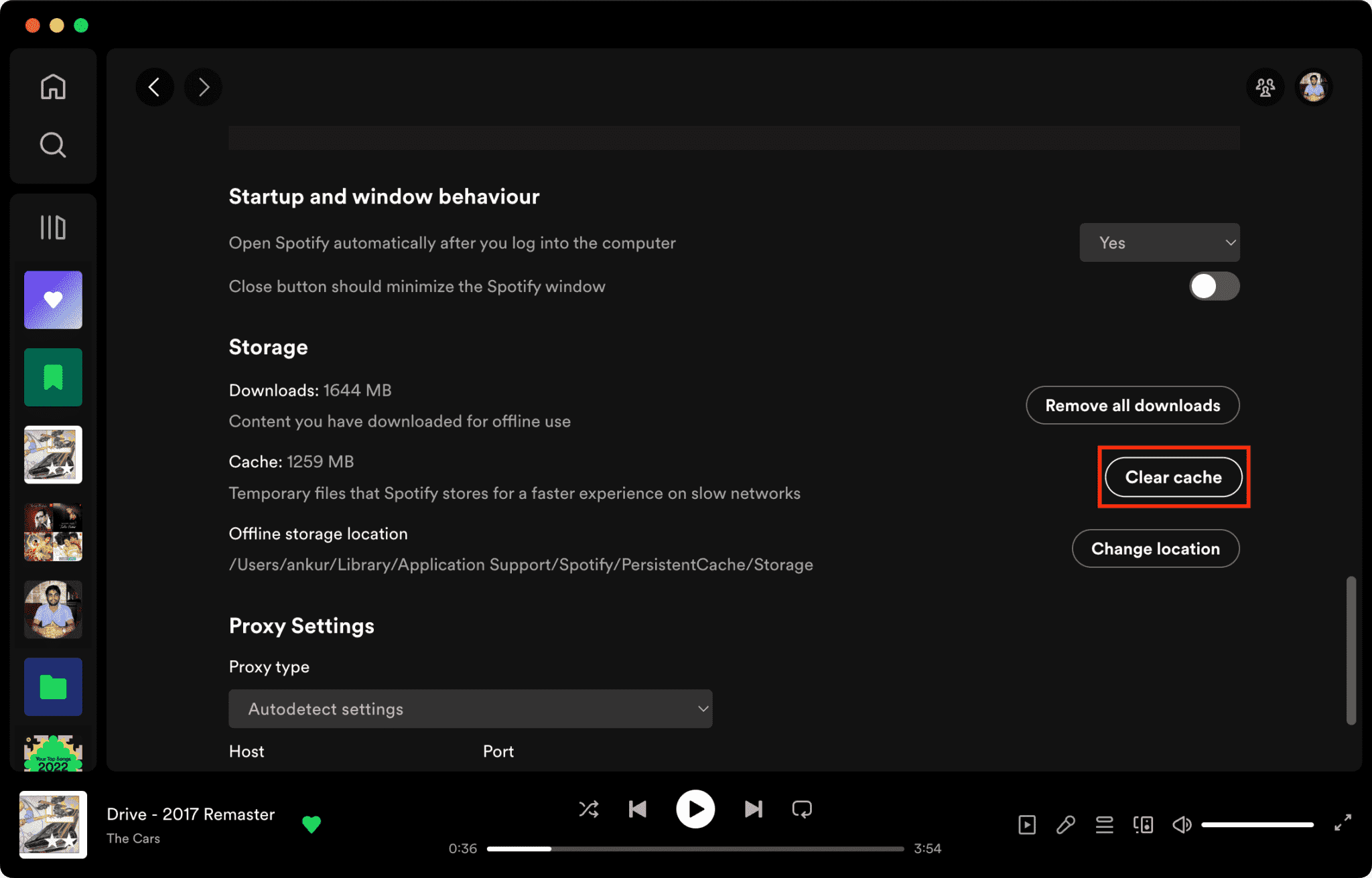
Artigo relacionado: Como limpar Spotify Cache no computador/dispositivo móvel >>>>>>
2. Reinicie o aplicativo
Executar uma reinicialização manual é uma etapa fundamental de solução de problemas que aborda eficazmente muitas das causas subjacentes do problema. Spotify muito lento. Esse processo limpa a memória temporária (RAM) do aplicativo e força o encerramento de quaisquer "threads zumbis" ou processos redundantes em segundo plano que possam estar consumindo recursos do sistema. Ao eliminar esses gargalos de execução, você permite que o software inicialize uma sessão limpa, muitas vezes resolvendo travamentos persistentes e atrasos na interface que prejudicam a experiência de streaming.
3. Atualize para a versão mais recente
Os desenvolvedores frequentemente lançam patches para corrigir vazamentos de memória e bugs de compatibilidade. Executar uma versão desatualizada de Spotify Significa que você está perdendo essas otimizações de desempenho cruciais.
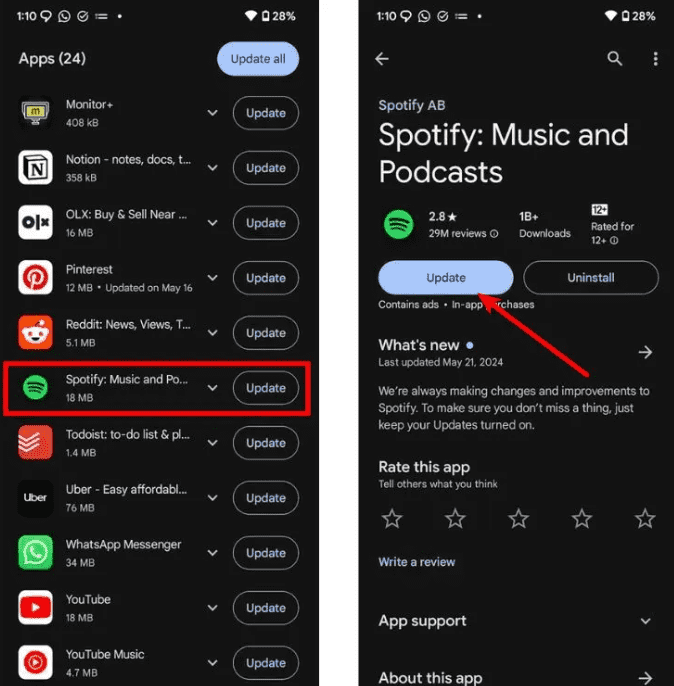
4. Execute uma reinstalação limpa.
Se os problemas de desempenho persistirem, uma reinstalação completa geralmente é necessária. Isso remove todos os arquivos de biblioteca e entradas de registro associados que possam estar corrompidos, proporcionando um ambiente "novo em folha" para o software.
5. Alternar entre Wi-Fi e dados móveis
A congestão da rede ou um "bloqueio de DNS" podem ser a causa de tempos de carregamento lentos. Mudar o tipo de conexão pode contornar a interferência da rede local e ajudar a identificar se o problema está no seu provedor de internet (ISP) e não no próprio aplicativo.
Essas etapas podem reduzir temporariamente os problemas relacionados ao motivo de ser Spotify São muito lentos, mas não resolvem permanentemente a instabilidade do streaming.
Parte 3. A melhor maneira de melhorar Spotify Experiência de escuta
Se você deseja evitar completamente o buffering, travamentos ou atrasos no streaming, a solução mais eficaz é ouvir música offline, sem depender de serviços de streaming instáveis. Recomendamos que você experimente ouvir música offline. DumpMedia Spotify Music Converter.
Download grátis Download grátis
Com esta ferramenta, você pode:
- Converta música para MP3., WAV, FLAC
- Ouça offline sem interrupções.
- Evite completamente os atrasos no streaming.
- Reproduza música em qualquer dispositivo.
- Manter músicas permanentemente
Em vez de ficar perguntando constantemente por que é Spotify Por ser tão lenta, essa abordagem elimina o problema na origem: a dependência de transmissões ao vivo. Ao utilizar ferramentas de conversão para transformar fluxos criptografados em arquivos localizados, os usuários podem contornar as limitações inerentes às plataformas online, como buffering, dependência de rede, atraso na reprodução e outros problemas.
Como baixar Spotify Canções para MP3
Passo 1. Baixe e instale DumpMedia Spotify Music Converter para o seu Mac/Windows. Inicie-o e você verá a interface. Use seu Spotify Conta Premium/Gratuita para efetuar login.
Download grátis Download grátis
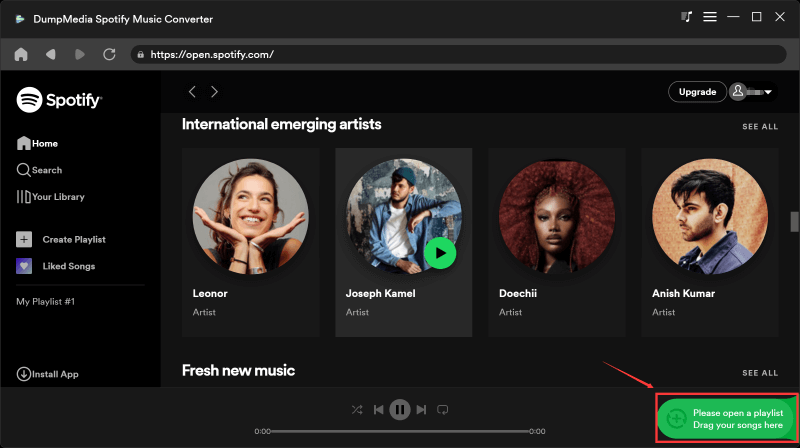
Passo 2. Agora você pode navegar até as músicas que deseja baixar. Basta arrastá-las diretamente para a lista de conversão.
Passo 3. Na interface de conversão, você pode escolher o formato de saída como MP3Em seguida, defina a taxa de amostragem ou a taxa de bits nas Preferências. Escolha também uma pasta onde os arquivos serão salvos.
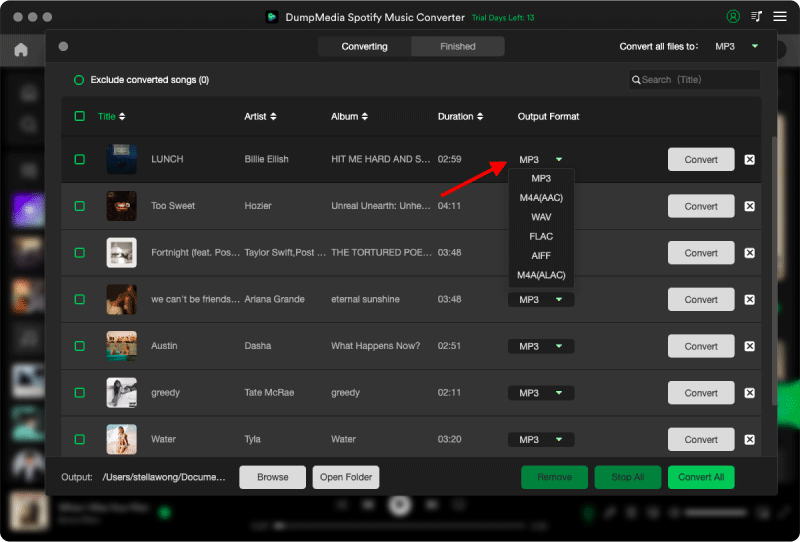
Passo 4. Por fim, toque no botão "Converter" na parte inferior da página e o software iniciará o processo de conversão.
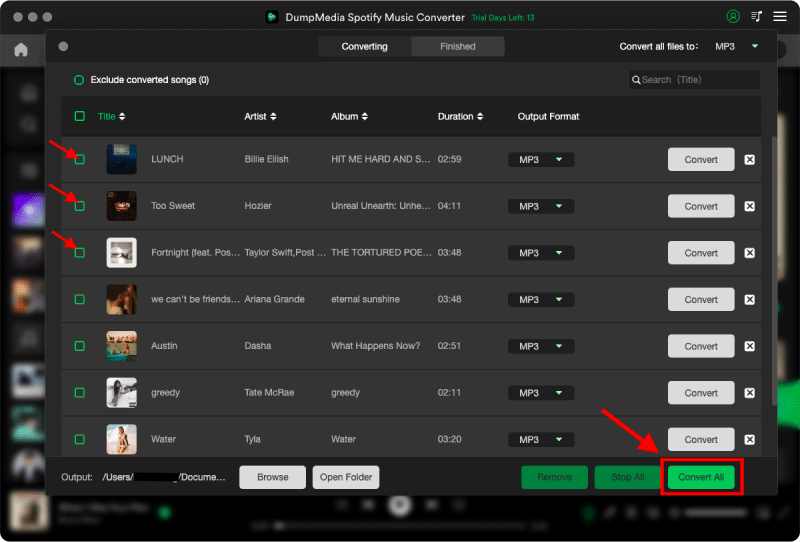
Para usuários avançados que priorizam uma experiência perfeita e de alta resolução, DumpMedia Spotify Music Converter Serve como uma solução permanente para a instabilidade de streaming, indo além de correções temporárias de aplicativos para alcançar verdadeira autonomia offline.
Parte 4. FAQs
Por que é Spotify O aplicativo está muito lento no celular?
Geralmente devido a sinal fraco, aplicativos em segundo plano ou sobrecarga de cache.
Por que é Spotify Tão lento no Wi-Fi?
Isso pode ser causado por instabilidade do roteador ou problemas de roteamento DNS.
Por que é Spotify Tão lento, mas a internet é rápida?
Isso geralmente ocorre devido a problemas de cache do aplicativo ou de desempenho do dispositivo.
Como faço para corrigir isso permanentemente? Spotify atraso?
A solução mais confiável é reduzir a dependência do streaming usando ferramentas de conversão de música offline.
Parte 5. Conclusão
Se você pergunta frequentemente por que é Spotify Quando a velocidade é tão baixa, o problema geralmente não é causado por um único fator, mas sim por uma combinação de problemas relacionados à rede, ao dispositivo e ao aplicativo. Embora soluções básicas possam melhorar o desempenho temporariamente, a experiência de audição mais estável é obtida eliminando completamente a dependência de streaming, utilizando ferramentas como... DumpMedia Spotify Music Converter.