


Pourquoi est-ce Spotify Tellement lent ? Des solutions éprouvées en 2026
Si vous vous demandez pourquoi Spotify Si l'application est si lente, vous n'êtes pas seul. De nombreux utilisateurs rencontrent des problèmes de mise en mémoire tampon, de lecture saccadée ou de chargement retardé lorsqu'ils l'utilisent. Spotify, même avec une connexion internet stable. Dans ce guide, nous expliquerons en détail pourquoi Spotify si lent, quelles en sont les causes et comment y remédier définitivement. Plus important encore, nous vous présenterons également une solution à long terme pour améliorer votre Spotify Une expérience d'écoute sans interruption.
Guide des matières Partie 1. Pourquoi est-ce Spotify Ralentissement soudain ? Explication des principales causesPartie 2. Comment réparer Spotify Être lent en permanencePartie 3. Meilleure façon d'améliorer Spotify Expérience d'écoutePartie 4. FAQPartie 5. Conclusion
Partie 1. Pourquoi est-ce Spotify Ralentissement soudain ? Explication des principales causes
Il existe plusieurs raisons pour lesquelles Spotify tellement lent, et la plupart des problèmes sont liés aux performances de l'application, aux conditions du réseau ou aux limitations de l'appareil.
1. Mauvaise connexion Internet
L'une des raisons les plus courantes pour lesquelles Spotify La connexion internet est tellement lente qu'elle est instable. Même de petites fluctuations peuvent provoquer des mises en mémoire tampon ou des retards de lecture.
2. Spotify Surcharge du cache
Avec le temps, les Spotify Le système stocke des fichiers cache pour améliorer les performances. Cependant, une trop grande quantité de données mises en cache peut ralentir l'application et constitue une des principales raisons de son utilisation. Spotify tellement lent sur de nombreux appareils.
3. Version de l'application obsolète
Utilisation d'un système obsolète Spotify Une version inadaptée peut entraîner des problèmes de performance. Les bugs et les problèmes de compatibilité expliquent souvent ce phénomène. Spotify L'application est très lente après les mises à jour.
4. Limitations des performances de l'appareil
Les appareils à faible mémoire ou plus anciens peuvent avoir du mal à gérer Spotify en douceur, ce qui est une autre raison courante pour laquelle le Spotify L'application est tellement lente.
5. Applications en arrière-plan consommant des ressources
Si plusieurs applications s'exécutent en arrière-plan, Spotify peut présenter des ralentissements dus à des ressources système limitées, ce qui explique en partie pourquoi Spotify La lecture est très lente.
6. Spotify Paramètres
De nombreux utilisateurs signalent que Spotify Le ralentissement ne se produit que lors de la lecture de musique en streaming. Ceci est généralement lié à l'ajustement du débit binaire du streaming ou à la commutation adaptative de la qualité. Ces facteurs expliquent pourquoi Spotify tellement lent, surtout pendant la lecture de musique, mais pas pendant l'utilisation d'autres applications.
Partie 2. Comment réparer Spotify Être lent en permanence
Est-ce votre Spotify Vous rencontrez des problèmes de latence, de saccades ou de temps de chargement interminables ? Voici quelques solutions efficaces pour améliorer les performances :
1. Effacez le Spotify Cache
Avec le temps, les Spotify L'application stocke une grande quantité de données temporaires et de pistes « mises en cache » pour accélérer la lecture. Cependant, un cache trop volumineux ou corrompu peut avoir l'effet inverse et entraîner un décalage important. Vider le cache dans les paramètres de l'application force le logiciel à actualiser sa structure de données.
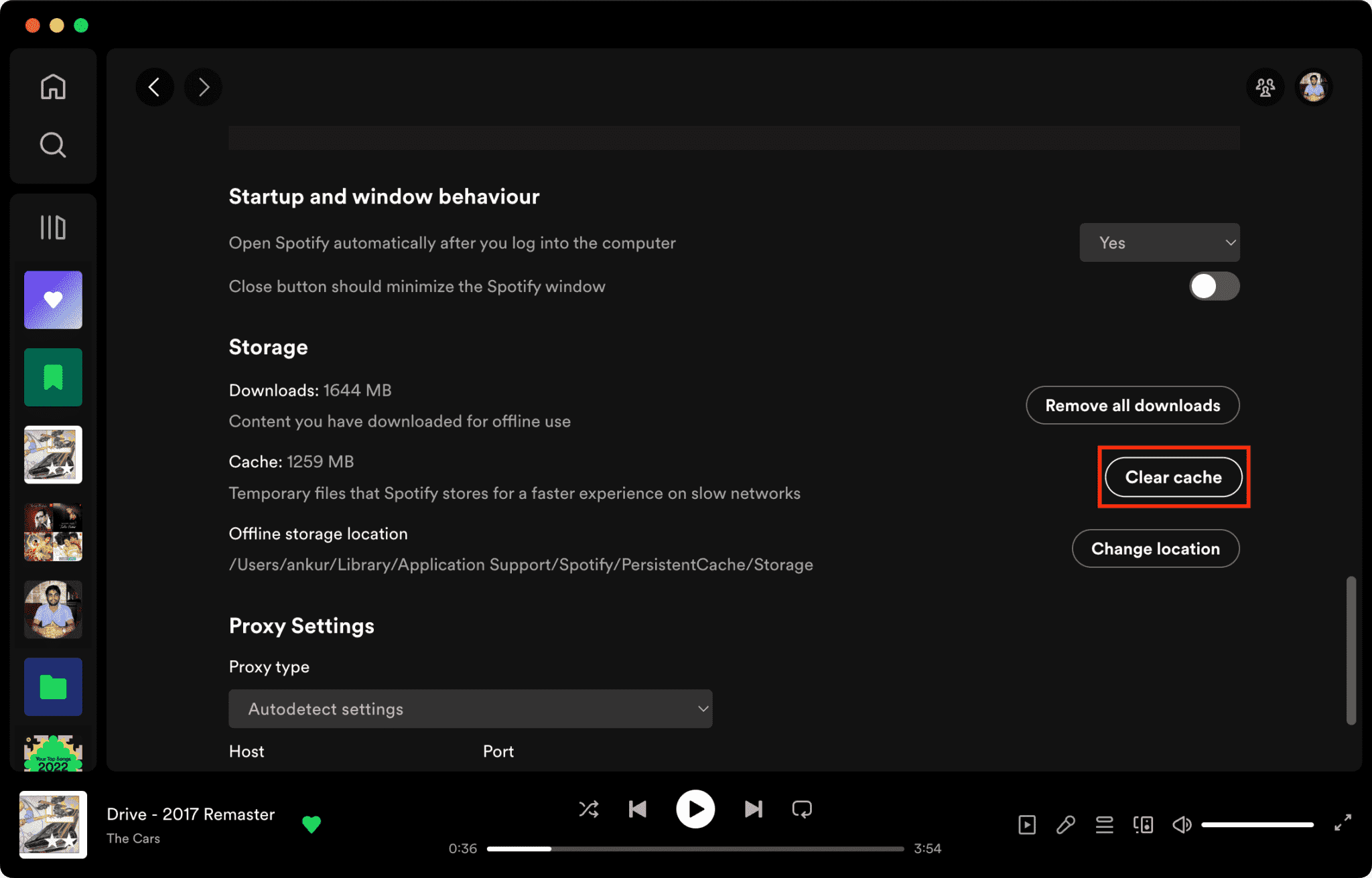
Article connexe: Comment effacer Spotify Cache sur ordinateur/mobile >>>>>>
2. Redémarrez l'application
Effectuer un redémarrage manuel est une étape fondamentale de dépannage qui permet de résoudre efficacement de nombreuses causes sous-jacentes du problème. Spotify C'est tellement lent. Ce processus vide la mémoire vive (RAM) de l'application et force l'arrêt des processus en arrière-plan inutiles ou « threads zombies » susceptibles de consommer des ressources système. En éliminant ces goulots d'étranglement, vous permettez au logiciel d'initialiser une session propre, ce qui résout souvent les blocages persistants et les ralentissements d'interface qui perturbent l'expérience de streaming.
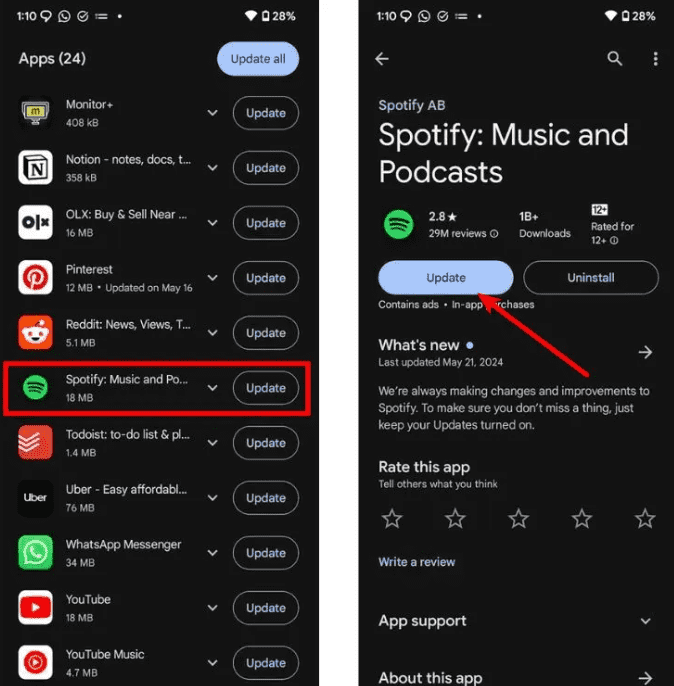
3. Mettre à jour vers la dernière version
Les développeurs publient fréquemment des correctifs pour résoudre les fuites de mémoire et les problèmes de compatibilité. Utiliser une version obsolète de Spotify Cela signifie que vous passez à côté de ces optimisations de performance essentielles.
4. Effectuez une réinstallation propre
Si les problèmes de performance persistent, une réinstallation complète est souvent nécessaire. Cette opération supprime tous les fichiers de bibliothèque et les entrées de registre associés qui pourraient être corrompus, offrant ainsi un environnement « comme neuf » au logiciel.
5. Basculer entre le Wi-Fi et les données mobiles
La congestion du réseau ou un blocage DNS sont souvent à l'origine des temps de chargement lents. Changer de type de connexion permet de contourner les interférences du réseau local et de déterminer si le problème vient de votre fournisseur d'accès à Internet plutôt que de l'application elle-même.
Ces mesures peuvent temporairement atténuer les problèmes liés à la raison pour laquelle Spotify Elles sont certes lentes, mais elles ne résolvent pas définitivement l'instabilité du streaming.
Partie 3. Meilleure façon d'améliorer Spotify Expérience d'écoute
Si vous souhaitez éviter complètement les mises en mémoire tampon, les décalages ou les délais de diffusion, la solution la plus efficace consiste à écouter de la musique hors ligne sans dépendre d'un streaming instable. Voici nos recommandations : DumpMedia Spotify Music Converter.
Téléchargement gratuit Téléchargement gratuit
Avec cet outil, vous pouvez :
- Convertir Spotify Musique à MP3, WAV, FLAC
- Écoutez hors ligne sans mise en mémoire tampon
- Évitez totalement les retards de streaming
- Écoutez de la musique sur n'importe quel appareil
- Conserver les chansons de façon permanente
Au lieu de constamment demander pourquoi Spotify Cette approche, bien que lente, élimine le problème à la source : la dépendance au streaming en direct. En utilisant des outils de conversion pour transformer les flux cryptés en ressources localisées, les utilisateurs peuvent contourner les limitations inhérentes aux plateformes en ligne, telles que la mise en mémoire tampon, la dépendance au réseau, le délai de lecture, etc.
Comment télécharger Spotify Chansons à MP3
Étape 1 : Téléchargez et installez DumpMedia Spotify Music Converter sur votre Mac/Windows. Lancez-le et vous verrez l'interface. Utilisez votre Spotify Compte Premium/Gratuit pour se connecter.
Téléchargement gratuit Téléchargement gratuit
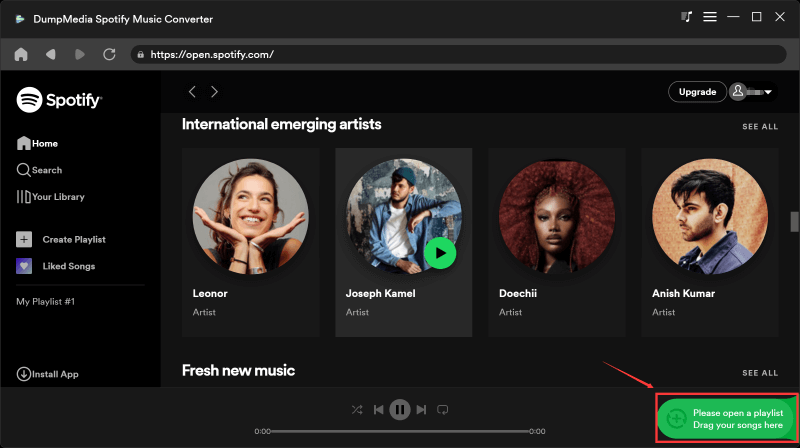
Étape 2. Vous pouvez maintenant sélectionner les morceaux que vous souhaitez télécharger et les glisser directement dans la liste de conversion.
Étape 3 : Sur l'interface de conversion, vous pouvez choisir le format de sortie comme MP3et définissez la fréquence d'échantillonnage ou le débit binaire dans les préférences. Choisissez également un dossier où les fichiers seront enregistrés.
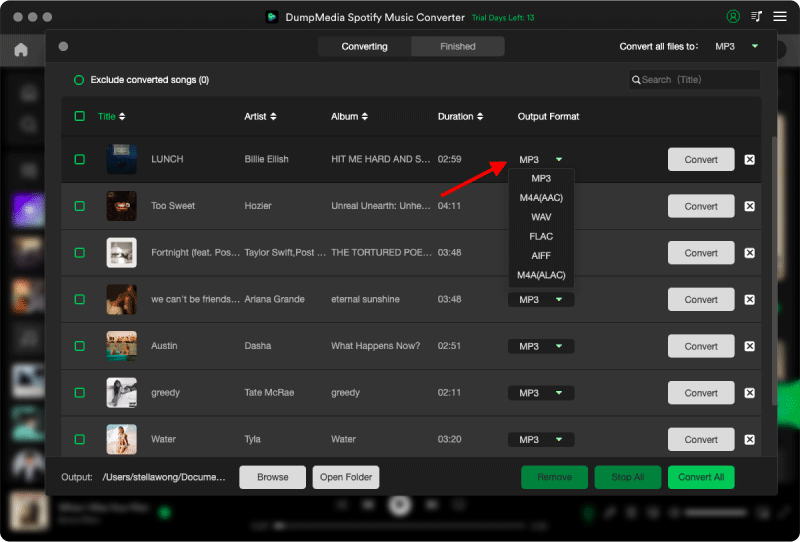
Étape 4. Enfin, appuyez sur le bouton « Convertir » en bas de la page, et le logiciel lancera le processus de conversion.
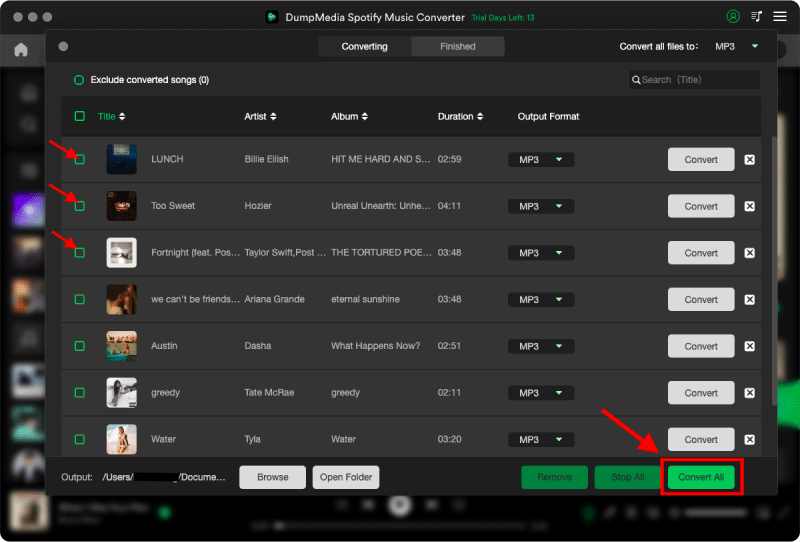
Pour les utilisateurs avancés qui privilégient une expérience fluide et en haute résolution, DumpMedia Spotify Music Converter Elle constitue une solution permanente à l'instabilité du streaming, allant au-delà des correctifs temporaires des applications pour parvenir à une véritable autonomie hors ligne.
Partie 4. FAQ
Pourquoi est- Spotify L'application est tellement lente sur mobile ?
Généralement dû à un signal faible, à des applications en arrière-plan ou à une surcharge du cache.
Pourquoi est- Spotify Si le Wi-Fi est lent ?
Cela peut être dû à une instabilité du routeur ou à des problèmes de routage DNS.
Pourquoi est- Spotify C'est tellement lent, mais internet est rapide ?
Cela est souvent dû à des problèmes de cache de l'application ou de performances de l'appareil.
Comment puis-je réparer définitivement ? Spotify poser?
La solution la plus fiable consiste à réduire la dépendance au streaming en utilisant des outils de conversion musicale hors ligne.
Partie 5. Conclusion
Si vous vous demandez fréquemment pourquoi Spotify La lenteur est telle que le problème n'a généralement pas une seule cause, mais une combinaison de problèmes liés au réseau, à l'appareil et à l'application. Bien que des solutions de base puissent améliorer temporairement les performances, l'expérience d'écoute la plus stable s'obtient en éliminant complètement la dépendance au streaming à l'aide d'outils comme DumpMedia Spotify Music Converter.